
IMPORTANT: YOUR HOME MAY BE REPOSSESSED IF YOU DO NOT KEEP UP REPAYMENTS ON YOUR MORTGAGE.
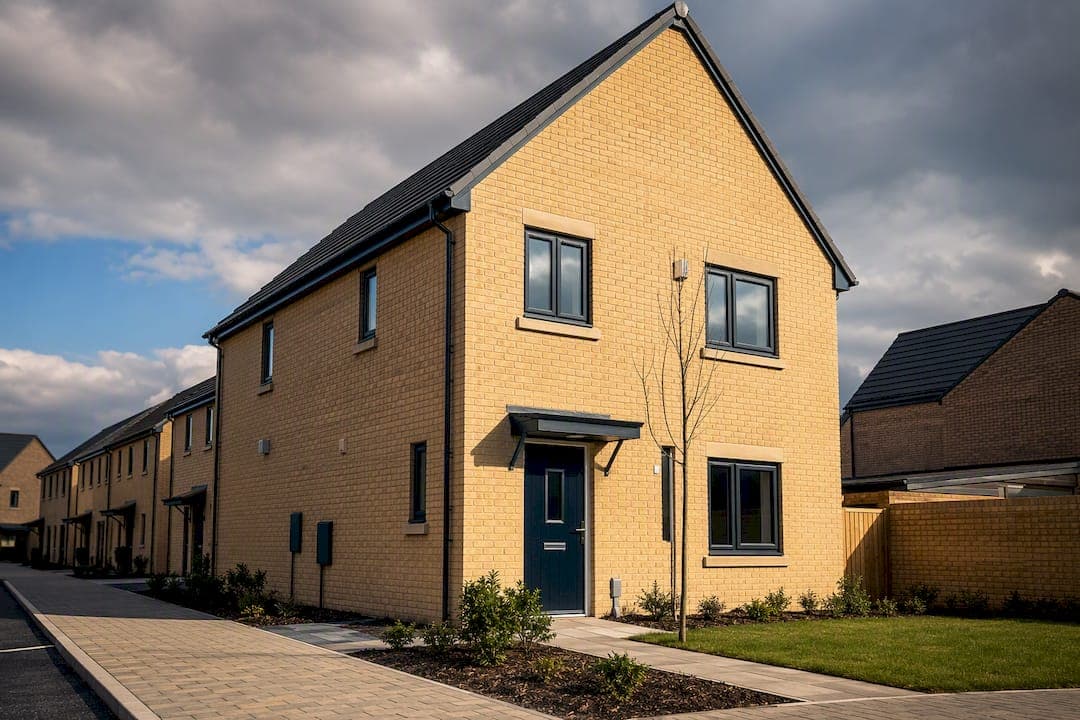
New build buy to let suits investors with cash to spare and a long horizon, not those chasing quick yield. Warranty cover and lower maintenance make the running costs predictable, but a new-build premium and tighter loan-to-value limits mean you need more deposit upfront than for an older property. The sections below cover mortgage requirements, tax and ownership structure, and a purchase checklist so you can weigh the numbers properly before you commit.
TL;DR:
- Most lenders require a minimum 25% deposit and cap loan-to-value at 70–75% for new-build buy-to-let properties, with stricter rental cover tests.
- New builds often have higher purchase premiums, which reduce initial yields and may lead to softer rents if multiple units compete locally.
- Upfront costs include reservation fees, deposits, stamp duty, legal fees, and service charges, with incentives sometimes deducted from the valuation.
- Section 24 tax rules limit mortgage interest deductions for individual landlords, making limited company ownership more tax-efficient but involving higher administration costs.
- Real yield calculations show gross yields around 5–6%, but net yields can be significantly lower once financing, management, and maintenance expenses are included.
Table of Contents
- What are the mortgage requirements for a new build buy to let?
- Advantages and disadvantages of new builds for landlords
- What does a new build buy to let actually cost upfront?
- How does Section 24 affect a new build buy-to-let investment?
- From reservation to completion: what can go wrong?
- How do you calculate real yield on a new-build buy-to-let?
- What should you check before you exchange contracts?
- How Haven Mark Advisers can help with new-build buy-to-let finance
- Sources
- FAQ
What are the mortgage requirements for a new build buy to let?
Lenders treat new-build buy-to-let purchases more cautiously than existing stock, largely because valuations on unbuilt or newly completed homes carry more uncertainty. Many lenders in the current market require a minimum 25% deposit on new-build buy-to-let, and cap loan-to-value at around around 70–75% for flats(https://intermediaries.virginmoney.com/lending-criteria/buy-to-let/new-build/), with houses sometimes stretching a little further depending on the provider.
Typical lender position: A 25% minimum deposit and 70–75% LTV cap on new-build flats is common across several major lenders, though individual criteria vary by property type and location.
Underwriters also apply rental cover, or interest cover ratio (ICR), tests. This checks the expected rent against the mortgage payment, usually at a stress rate above pay rate, to confirm the property can service the loan even if rates rise. New-build flats often face stricter scrutiny than houses because lenders worry about oversupply within the same development pushing rents or resale values down.
A few practical points worth knowing before you reserve a plot:
- Developer incentives (deposit contributions, furniture packages, stamp duty payments) above a modest level are often deducted from the valuation, reducing the effective LTV.
- Off-plan purchases carry completion-date risk, and some lenders are more conservative about issuing offers far in advance of practical completion.
- A property can sometimes still be classed as "new build" for up to two years after first occupation, which affects which mortgage products are available even on a technically second-hand sale.
- Contractors, company directors and anyone with irregular income often find high-street affordability calculators a poor fit, which is where a specialist mortgage adviser becomes genuinely useful rather than optional.
Advantages and disadvantages of new builds for landlords
The case for new build rests on predictability. Most come with a 10-year structural warranty, lower early maintenance costs, and modern EPC ratings that appeal to tenants watching their energy bills. Letting speed tends to be quicker too: new-build homes often attract stronger tenant demand, which shortens void periods and can partly offset lower starting yields.
The downsides are just as real:
- A new-build premium on the purchase price compresses gross yield from day one.
- Competing units in the same development can flood the local rental market, softening achievable rents.
- Snagging issues and early tenant disruption are common in the first months of occupation.
- Resale within the "new build" window can be harder if buyers assume the premium still applies.
Pro Tip: Ask the developer how many similar units in the same phase are already let or listed for rent before you reserve. If the answer is vague, treat that as a warning sign about future rental competition.
What does a new build buy to let actually cost upfront?
Budgeting for a new build means planning for several layers of cost beyond the headline price. Here is the typical sequence:
- Reservation fee — usually a few hundred pounds, paid to hold the plot before exchange.
- Deposit — commonly 25% of the purchase price for buy-to-let, sometimes more for flats depending on the lender.
- Stamp Duty Land Tax (SDLT) — the additional property surcharge applies on top of standard SDLT bands, so factor this into your cash requirement from the outset rather than at the last minute.
- Legal and conveyancing fees — often higher than a standard purchase because solicitors must review the developer's build contract, warranty documentation and any management company arrangements.
- Service charges and ground rent — payable from completion and a direct drag on net yield, particularly on flats with lifts, communal gardens or concierge services.
Large incentives above a modest threshold are frequently stripped out of the figure lenders use to calculate LTV, which can leave you needing extra cash to bridge the gap.
How does Section 24 affect a new build buy-to-let investment?
Individual landlords no longer deduct mortgage interest from rental income before calculating tax. Instead, Section 24 replaces that deduction with a basic-rate tax credit, currently set at 20%, applied after your tax liability is worked out. For higher and additional-rate taxpayers, this can push the effective tax rate on rental profit well above the headline income tax band, because mortgage interest is no longer sheltering income from higher-rate tax.
This is why many landlords now consider a limited company structure for new purchases:
- Companies can usually deduct mortgage interest as a business expense, avoiding the Section 24 restriction entirely.
- Corporation tax rates on rental profit within a company can be lower than an individual's marginal income tax rate.
- Extracting profit from the company (via dividends or salary) creates a second layer of tax, and lender criteria for limited company buy-to-let mortgages can differ from personal-name lending, sometimes with fewer product choices or different rate pricing.
- Setting up and running a limited company (SPV) involves accountancy costs that individual ownership avoids.
Making Tax Digital for Income Tax also matters here. From April 2026, landlords with qualifying gross property income above a specific threshold must keep digital records and submit quarterly updates rather than a single annual return, a meaningful change in bookkeeping discipline for anyone running multiple properties. Given how much the right ownership structure can shift your net return, this is a decision worth taking specific tax advice on rather than following generic guidance.
From reservation to completion: what can go wrong?
New-build purchases run on the developer's timetable, not yours, and that mismatch causes most of the problems landlords encounter.
- Reservation — you pay a fee and agree a price, often before the build is finished.
- Exchange of contracts — usually within 28 days of reservation, with a legally binding completion date, sometimes expressed as a window rather than a fixed day.
- Mortgage offer — typically valid for three to six months; if the developer's build overruns, your offer can lapse before completion, forcing a costly reapplication at whatever rate is then available.
- Practical completion and snagging — inspect the property as soon as access is granted, ideally with an independent snagging surveyor, and get defects logged and agreed for repair before you complete or shortly after.
- Warranty registration — confirm your 10-year warranty documentation is issued; note that warranties typically cover structural defects, not cosmetic snags or appliance faults.
Pro Tip: Ask your solicitor to check the management company's accountability and service-charge governance before exchange, not after. Poorly worded contracts sometimes leave the freeholder free to increase charges with little landlord recourse.
How do you calculate real yield on a new-build buy-to-let?
Gross yield is annual rent divided by purchase price. Net yield subtracts mortgage interest, management and letting fees, service charges, insurance, a void allowance and repairs before dividing by the price paid, including SDLT.
Reasonable gross yields on new-build buy-to-let outside London commonly sit around 5–6%, with London typically lower once purchase prices are factored in. Net yield is materially thinner once financing costs are included.
- Cash-on-cash return measures net income against the cash you actually put in (deposit plus fees), not the full property value, so a bigger deposit or a hefty new-build premium can quietly erode this figure even when gross yield looks acceptable.
- Run a sensitivity check: model a 1–2 percentage point rate rise and an extra month of void each year to see whether the investment still clears your target return.
What should you check before you exchange contracts?
A short checklist before signing protects both your mortgage offer and your cash position.
- Ask your lender: what LTV applies to this specific new-build type, how incentives are treated in the valuation, and how long the mortgage offer remains valid against the developer's completion date.
- Ask your solicitor: to confirm tenure, service-charge provisions, management company accountability, and any restrictive covenants affecting letting (some developments restrict short-term lets or subletting).
- Ask the developer: for full warranty documentation, evidence of completion guarantees, and contact details for the management company that will run the building once occupied.
- Prepare your evidence early: income proof, deposit source documentation and, for company purchases, your SPV accounts, since incomplete paperwork is a common cause of delay near exchange.
Pro Tip: If your income is complex, contractor day rates, multiple companies, or foreign national status, gather your paperwork before you reserve, not after. A specialist mortgage adviser can flag lender-specific requirements while there's still time to adjust the timeline.
How Haven Mark Advisers can help with new-build buy-to-let finance
Securing finance on a new build is rarely a simple tick-box exercise, particularly when your income comes from contracting, a limited company, or overseas earnings that high-street calculators struggle to assess. Haven Mark Advisers is built around exactly that gap: one dedicated adviser stays with you from initial enquiry through to completion, rather than passing your case between different people at each stage.

That single point of contact matters most when a completion date is at risk of slipping and your mortgage offer needs revisiting, or when you're weighing a limited company structure against personal ownership and need someone who understands both the lending and the tax implications. Haven Mark Advisers has access to a broad range of UK lenders, including those more comfortable with off-plan purchases, SPV structures, and complex or foreign-national income. Protection advice, covering life cover, income protection and critical illness cover, is also available so your investment is protected against the unexpected as well as the predictable.
Fees are set out transparently before any work begins, detailed on the mortgage broker fees page, so there are no surprises at completion. If you're weighing up a new-build purchase, the sensible next step is to speak to an adviser before you reserve a plot, not after, so your finance strategy and purchase timeline are aligned from the outset. Explore the buy-to-let mortgage service to see how a dedicated adviser could support your next purchase.

Sources
For lending criteria, tax rules and warranty checks, consult GOV.UK's Section 24 guidance, the MHCLG how to buy guide, and current landlord tax guidance for MTD thresholds.
This article is general information, not a substitute for advice from a qualified financial advisor. Consult a qualified financial professional about your own circumstances before acting on anything here.
FAQ
Can you get a 100% mortgage on a new build?
No mainstream buy-to-let lender offers 100% financing on a new build; most require at least a 25% deposit, and some cap LTV lower still for flats.
Can I get a 95% mortgage on a new build?
95% mortgages exist for owner-occupier purchases under certain schemes, but buy-to-let lending on new builds typically requires substantially more deposit, often 25% or more.
What is the 2% rule for renting?
The "2% rule" is an informal US investment guideline suggesting monthly rent should equal roughly 2% of the purchase price; it isn't a standard used by UK lenders, who instead assess affordability through rental cover (ICR) tests.
Does a new build come with a warranty?
Most new builds include a 10-year structural warranty, though this typically covers major structural defects rather than cosmetic snags or appliance faults, so it's worth checking the exclusions before completion.
Recommended
This article provides general information only and does not constitute personalised mortgage advice. Mortgage availability, affordability and lender criteria depend on individual circumstances and may change. Please seek advice tailored to your circumstances before acting on this information.