

IMPORTANT: YOUR HOME MAY BE REPOSSESSED IF YOU DO NOT KEEP UP REPAYMENTS ON YOUR MORTGAGE.
Yes, you can usually get a pre settled status mortgage in the UK, but approval turns on deposit size, income, residency history and correct documentation rather than the status itself. Some lenders treat pre-settled applicants much like settled residents; others ask for a longer UK address history or a bigger deposit. Before applying, generate a GOV.UK share code and gather standard affordability evidence.
TL;DR:
- Most lenders require proof of residency, income, and a deposit, with some accepting as little as 5% for pre-settled applicants.
- Generating a GOV.UK share code and providing recent identification and proof of residence streamline verification and approval processes.
- Building a UK credit footprint through active account use and timely repayment of existing UK debts improves mortgage eligibility.
- Application success varies significantly based on timing since arrival, employment status, and whether applicants are applying jointly with settled individuals.
- Using a specialized mortgage adviser can improve matching to suitable lenders and proactively manage underwriting delays.
Table of Contents
- How lenders view pre-settled status: eligibility and typical criteria
- Proving your status and the documents lenders will ask for
- Practical steps to apply for a mortgage with pre-settled status
- Common scenarios that change your application
- What to do next: your immediate checklist
- How Haven Mark Advisers can help with a pre settled status mortgage
- Sources
- FAQ
How lenders view pre-settled status: eligibility and typical criteria
Pre-settled status is not, on its own, a reason for a lender to decline an application. It sits alongside the usual checks every mortgage applicant faces: residency, deposit, income and credit history. Where immigration status genuinely changes things is in how much weight a lender puts on your time in the UK and how confident they feel verifying your identity.
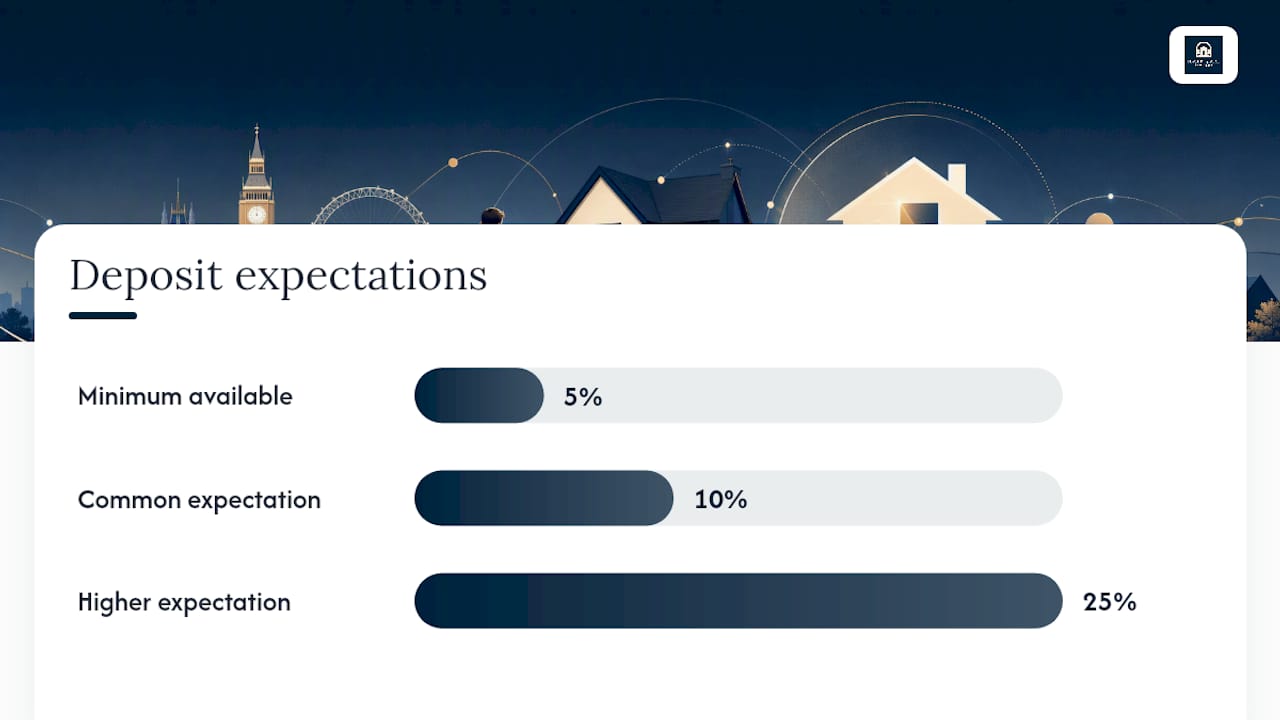
Residency expectations vary sharply between lenders. Some want three years of UK address history; others will lend to someone who arrived far more recently, provided the rest of the profile is strong. On deposits, 5% mortgages exist for qualifying pre-settled applicants, but many lenders expect 10% to 25% depending on your circumstances and how they classify EU Settlement Scheme cases.
Affordability follows familiar rules: most lenders work on income multiples of roughly four to five times salary, though treatment of bonuses, overtime and second incomes differs by lender. A thin or nonexistent UK credit file is often the bigger obstacle than the visa status itself.
- A UK bank account with regular salary payments, even for a few months, builds a visible credit footprint.
- A mobile contract or utility bill in your name helps credit reference agencies build a file faster than cash-only living.
- Settling existing UK borrowing (a credit card, a car finance agreement) on time strengthens your score quickly.
Pro Tip: Open and actively use a UK current account as early as possible. Lenders read a blank credit file as risk, not neutrality, and it can matter more than your visa category.
Proving your status and the documents lenders will ask for
Lenders need to see two things: who you are, and what your immigration permission allows. GOV.UK's view and prove service generates a time-limited share code, which combined with your date of birth lets a lender check your status online through the government's own verification tool.
- Generate a share code through the GOV.UK "view and prove your immigration status" service before you apply.
- Provide a valid passport or biometric residence permit alongside the share code as identity backup.
- Supply recent mortgage or rental statements, since GOV.UK's evidence of UK residence guidance treats these as valid proof of continuous residence, often needing to be dated within the last six months.
- Show a clear paper trail for your deposit, whether from savings, a gift, or an inheritance.
GOV.UK's own guidance for financial institutions confirms that eVisas are acceptable proof of identity and immigration status, giving lenders a direct, government-backed route to verify applicants rather than relying on physical documents alone.
Practical steps to apply for a mortgage with pre-settled status
Start with a mortgage in principle. It costs nothing, tells you roughly what a lender might offer, and gives you a figure to house-hunt against before you commit to a property.
From there, the process runs in a fairly fixed order:
- Get a mortgage in principle early, ideally from a lender known to accept pre-settled applicants in your situation.
- Work with a whole-of-market broker or a specialist adviser who understands immigration-status cases, so you are matched to lenders likely to say yes rather than testing each one blind.
- Build one documentation pack covering ID, your share code, payslips or accounts, bank statements and proof of deposit source.
- Expect underwriting and valuation to take several weeks; a larger deposit or a guarantor can smooth this if your residency history is short.
Presenting a single, clearly labelled documentation set rather than sending files piecemeal tends to cut the number of follow-up requests an underwriter makes, which shortens the whole timeline.
Common scenarios that change your application
Not every pre-settled applicant faces the same hurdles. The details of your situation, more than the status itself, decide which lenders are realistically open to you.
- Self-employed applicants typically need two to three years of accounts and SA302s; some lenders will accept a shorter trading history if the evidence of income is strong and consistent.
- Recent arrivals face the widest split in lender appetite: some accept minimal UK history, while others insist on 12 to 36 months before they will lend, making a larger deposit a useful lever if you have only just moved.
- Joint applicants with a partner who holds settled status often open up more lenders and better loan-to-value terms than either applicant would get alone.
- Buy-to-let cases generally demand higher deposits and stronger rental coverage ratios, since lenders view non-owner-occupied lending as higher risk regardless of immigration status.
Pro Tip: If you also hold another UK immigration permission, GOV.UK's guidance on proving pre-settled status alongside it explains how to have that status added back to your eVisa, which avoids confusing a lender's checking system.
What to do next: your immediate checklist
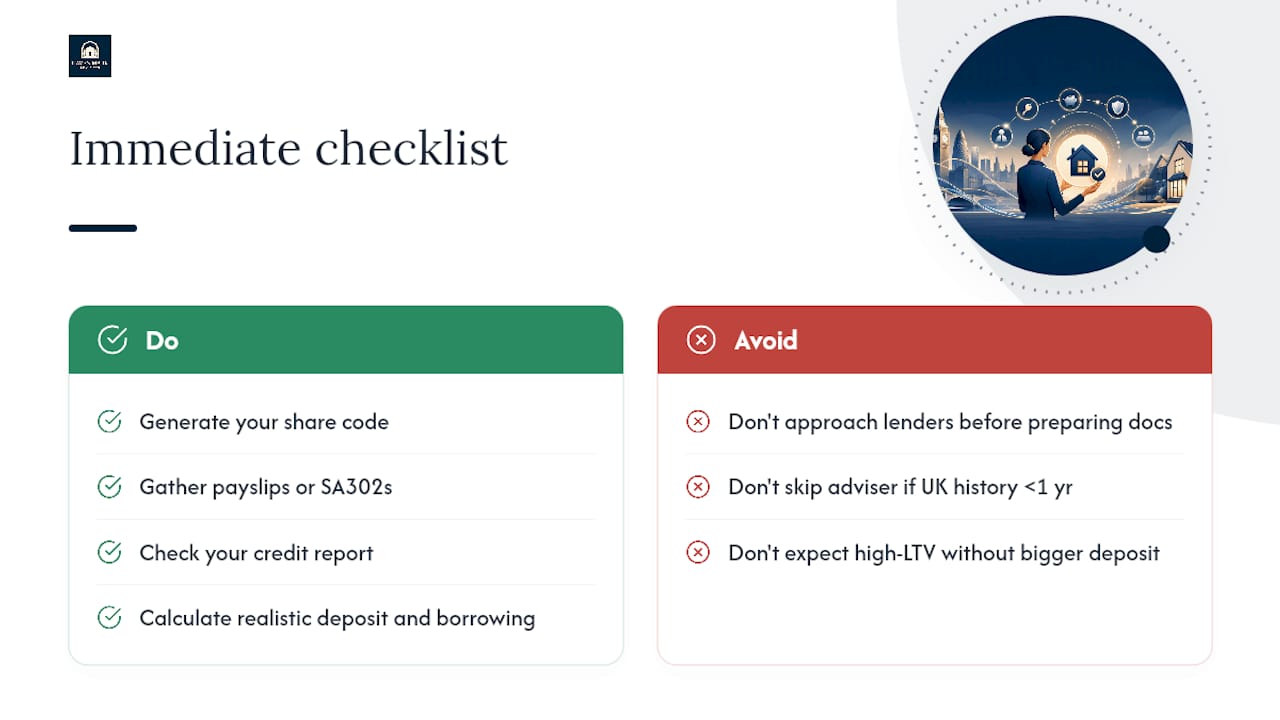
Generate your share code, pull together payslips or SA302s, check your credit report and work out a realistic deposit and borrowing figure before approaching any lender. If your income is complex, your UK history is under a year, or you need a high loan-to-value deal, that is the point at which a dedicated adviser earns their fee. Often, one change, a bigger deposit or a joint applicant, is enough to open up several more lenders.
How Haven Mark Advisers can help with a pre settled status mortgage
Haven Mark Advisers gives every client one dedicated adviser for the entire process, rather than passing you between departments while your file sits in a queue. For pre-settled applicants, that means one person who checks your documentation pack against lender criteria upfront, matches you to lenders whose policies genuinely fit your residency and income profile, and manages underwriting proactively rather than waiting for problems to surface.

If you are weighing up a mortgage for EU citizens or working through options as a foreign national with a dependent visa mortgage question, the groundwork is the same: correct evidence, the right lender match, and someone tracking the case end to end. Haven Mark Advisers's UK visa and foreign national mortgage service is built around exactly this kind of case, and the residential mortgages team can talk you through what a realistic deposit and lender shortlist looks like for your specific circumstances. Book a discovery call to find out where you stand before you start viewing properties.
This article is general information, not a substitute for advice from a qualified financial advisor. Consult a qualified financial professional about your own circumstances before acting on anything here.
Sources
FAQ
Can non-UK residents get a mortgage in the UK?
Non-residents can sometimes get a UK mortgage, but most lenders in this space require higher deposits and charge different rates than they would for a UK resident with pre-settled or settled status.
What is the new rule for pre-settled status?
There is no single "new rule"; GOV.UK's guidance on proving pre-settled status alongside another UK immigration permission sets out how status is evidenced and how it can be added back to an eVisa where it still applies.
What salary do I need for a £250,000 mortgage in the UK?
It depends on the lender's income multiple, but working on a common four to five times salary basis, you would typically need a household income in line with those multiples, alongside a suitable deposit and clean affordability checks.
Can I get permanent residency in the UK if I buy a house?
No. Buying a property has no bearing on your immigration status; settled status depends on meeting the EU Settlement Scheme's own residence conditions, not on homeownership.
Does converting from pre-settled to settled status affect an existing mortgage?
No action is usually required. Lenders typically let you keep your existing mortgage as is, and gaining settled status tends to widen your options when you come to remortgage.
Recommended
- Skilled worker visa mortgage: can you get one in the UK?
- Foreign National Mortgage in the UK: A Complete Guide
- Solicitor mortgage: practical guide for UK legal professionals
- UK Visa & Foreign National Mortgages
This article provides general information only and does not constitute personalised mortgage advice. Mortgage availability, affordability and lender criteria depend on individual circumstances and may change. Please seek advice tailored to your circumstances before acting on this information.