

IMPORTANT: YOUR HOME MAY BE REPOSSESSED IF YOU DO NOT KEEP UP REPAYMENTS ON YOUR MORTGAGE.
Yes, you can get a mortgage on a spouse visa in England, but the terms depend heavily on how you apply. A joint application with a British or settled partner usually opens up mainstream lenders and lower-deposit products, while a sole application on a time-limited visa faces a narrower lender panel and typically needs a bigger deposit. Your first practical steps are to check your Biometric Residence Permit or visa expiry date, decide whether to apply jointly or alone, and start gathering deposit evidence early.
TL;DR:
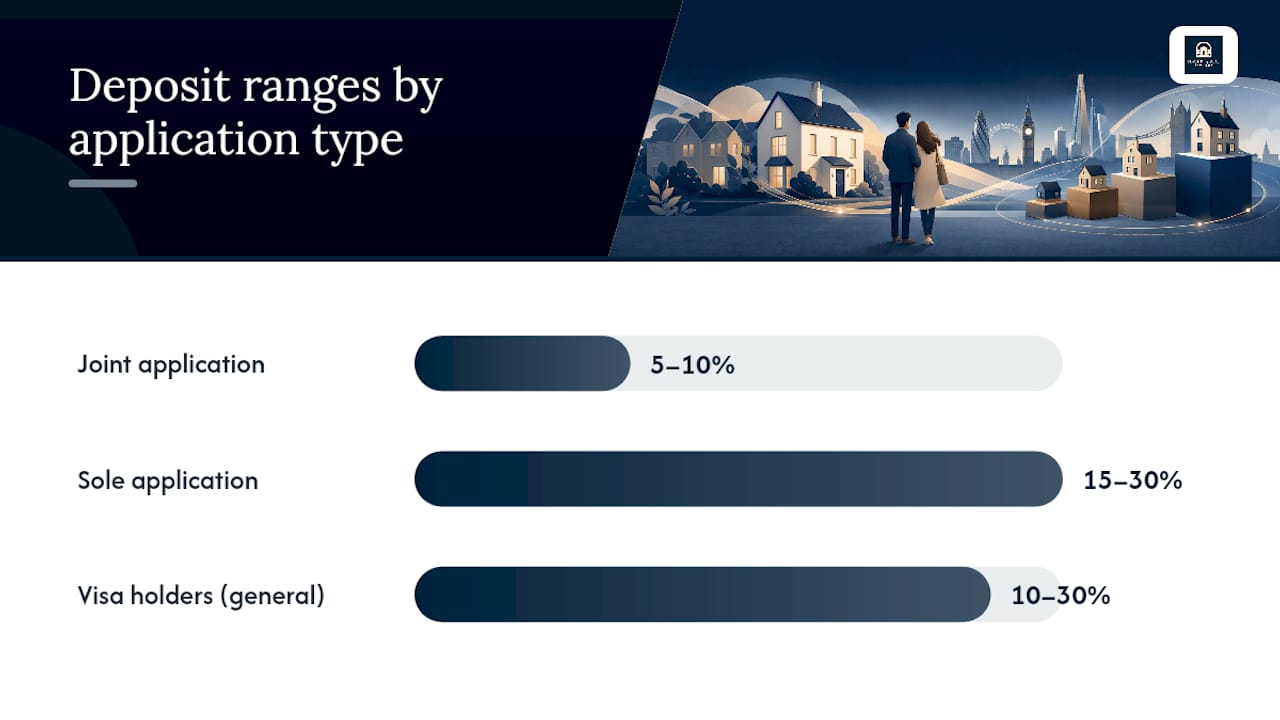
- Mainstream lenders generally require a larger deposit of 15% to 30% for sole visa applications, while joint applications with a settled partner may only need 5% to 10%.
- Borrowers with less than 12 months remaining on their visa typically face limited lender options, often needing a specialist lender or a larger deposit.
- Having at least six months' deposit in a UK bank account and a clear source of funds improves chances with lenders and simplifies the process.
- Applicants with strong UK employment, a UK credit footprint, and stable visa status are more likely to access favorable rates and higher loan-to-value ratios.
- A dedicated mortgage adviser can significantly streamline the application process, especially for cases with short visas, complex income, or limited UK credit history.
Table of Contents
- Who is eligible for a spouse visa mortgage?
- How much deposit do you need on a spouse visa?
- What documents will lenders ask for?
- Joint or sole application: which suits you?
- How can you improve your chances before applying?
- Remortgaging, buy-to-let, and visa renewals
- Why a specialist adviser matters for spouse visa cases
- How Haven Mark Advisers can help with your spouse visa mortgage
- Sources
- FAQ
Who is eligible for a spouse visa mortgage?
Lenders split into two broad groups when they assess spouse-visa applications. Mainstream high-street lenders tend to offer the widest choice and the lowest loan-to-value requirements, but usually reserve their best products for joint applications backed by a British or settled partner. Specialist lenders operate a smaller panel but flex further on visa length, sole applications, and less conventional income.
Visa duration matters, though not in a fixed way. Some lenders reference thresholds around several months remaining on a visa, but these vary by lender rather than forming a fixed rule. A broker summary of spouse-visa mortgage lending notes that joint applications with a settled partner generally unlock mainstream lenders and better loan-to-value ratios, while sole visa-holder applications more often sit with the specialist panel.
Applying with a British or settled partner tends to broaden your options considerably. The lender assesses household income and affordability together, and the settled partner's status effectively anchors the case in the eyes of underwriters. Employment type and time spent in the UK also shape which lenders will look at your file:
- Employed, salaried applicants with a UK employment contract usually face the fewest complications.
- Contractors and the self-employed need to demonstrate consistent income, often over two to three years of accounts or contracts.
- Recent arrivals with limited UK employment history may need to wait or lean on a specialist lender.
- Applicants with a settled co-applicant generally access more of the market than sole visa-holder applicants.
Because criteria differ so much between lenders, an early eligibility check with an adviser who knows the panel can save weeks of wasted applications to the wrong lender.
How much deposit do you need on a spouse visa?
Deposit size is often the single biggest lever spouse-visa applicants can pull. On a joint application with a settled partner, some mainstream lenders will consider deposits from 5% to 10%, similar to a standard first-time buyer case. On a sole spouse-visa application, expect the ask to sit higher, commonly 15% to 30%, according to guidance on spouse visa mortgage eligibility, which also notes deposit expectations for visa holders generally fall between 10% and 30% depending on individual circumstances.
Specialist lenders sometimes accept a smaller deposit than that range in exchange for a higher interest rate, particularly where the applicant has a strong income but a short visa runway or thin UK credit file. Deposit size, visa length, and credit history interact constantly in underwriting decisions, so a stronger position on one factor can sometimes offset a weaker position on another.
Before you get to the offer stage, lenders will also want to check:
- Where the deposit money came from (source of funds).
- How long it has sat in a UK bank account, since a deposit that has only just arrived tends to trigger extra anti-money-laundering questions.
- Whether any part of the deposit was gifted, and if so, from whom.
A worked example helps here. An applicant with 18 months left on their visa, a strong salary, and a deposit sitting in a UK account for six months is a straightforward case for most specialist lenders. An applicant with 8 months remaining, a thin credit file, and a deposit that just landed from overseas will likely need more time, more paperwork, or a smaller, more patient specialist lender.
What documents will lenders ask for?
Underwriters build their decision from a fairly predictable document set, and having it ready before you apply speeds everything up considerably.
Immigration evidence comes first. Lenders typically want to see your Biometric Residence Permit, your visa grant letter, and confirmation of your immigration status. Most now accept the Gov, which lets you generate a share code so a lender can verify your visa type and expiry date directly rather than relying on a physical document alone. The GOV.UK partner visa guidance sets out the visa route itself and is worth reading before you approach any lender.
Income evidence differs by employment type:
- Employees generally need recent payslips and a P60.
- Self-employed applicants need SA302s and two to three years of accounts, similar to the evidence covered in guidance on self-employed mortgage applications.
- Contractors need verified contracts and, ideally, a clear day-rate history.
On top of income, lenders want bank statements, proof of deposit, and standard anti-money-laundering documentation. A broker checklist for spouse visa mortgages recommends preparing this bundle well ahead of application, alongside marriage evidence confirming the relationship behind the visa.
Credit history rounds out the picture. A thin UK credit file, common for recent arrivals, does not automatically block an application, but it narrows the panel. Some lenders will look at overseas credit history as supporting evidence, though most still weigh UK footprint most heavily, according to deposit and eligibility guidance for spouse visa mortgages.
Joint or sole application: which suits you?
The application route you choose affects rate, deposit, and lender choice more than almost any other factor.
- Joint application with a settled or British partner. This is usually the strongest route. It typically unlocks the mainstream high-street panel, higher loan-to-value borrowing, and more competitive pricing, because the settled partner's status anchors the case for underwriters.
- Sole application on a spouse visa. This makes sense when the visa holder is the main earner or the partner has a poor credit history that could weaken a joint case. Expect a narrower lender panel, a larger deposit, and sometimes a modest rate premium.
- Mixed-status households where both applicants hold time-limited visas. These cases sit with a smaller group of specialist lenders willing to underwrite two visa timelines at once, and tend to need longer processing.
A quick comparison shows the gap in practice: a couple with a settled partner and a joint income of £70,000 might comfortably reach mainstream lenders offering 90% loan-to-value. A sole applicant on the same income but with 10 months left on their visa is more likely to be offered 75% to 80% loan-to-value through a specialist lender.
How can you improve your chances before applying?
Preparation genuinely changes outcomes here, more than in most standard mortgage cases.
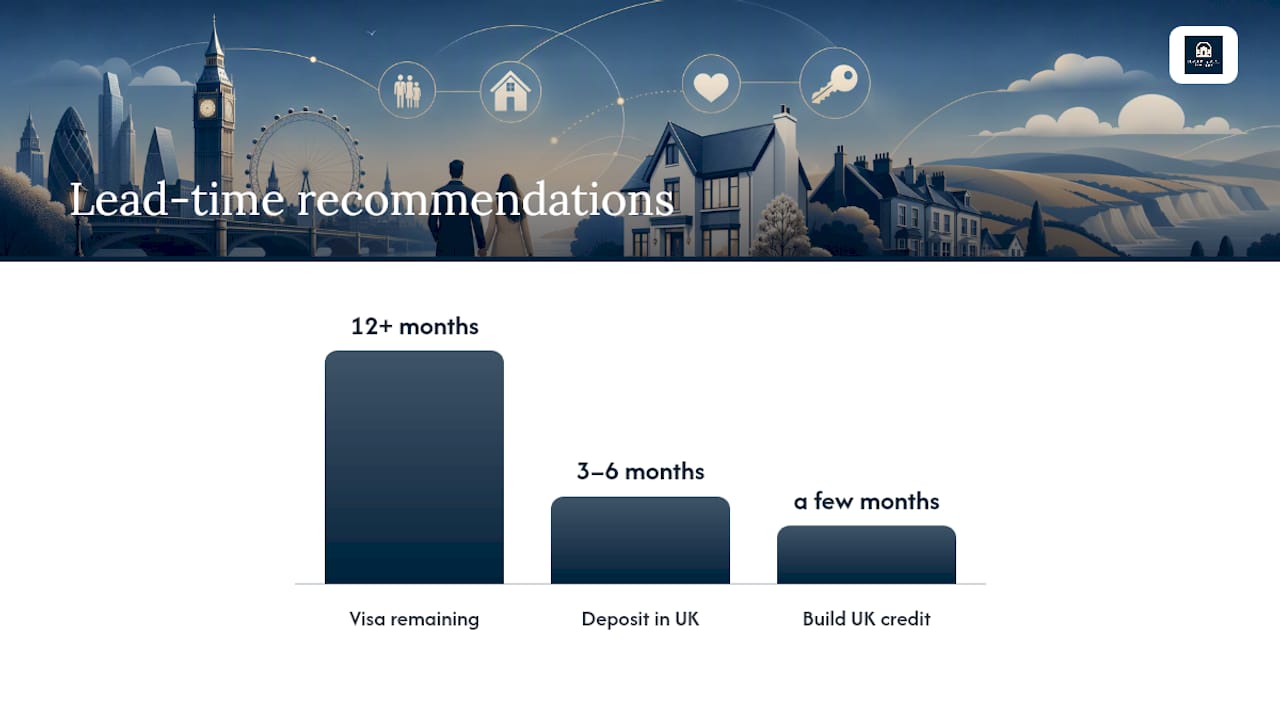
Timing matters first. Where practical, aim to apply with 12 months or more remaining on your visa. This gives lenders confidence that your immigration status will not lapse mid-underwriting, and it stabilises which lenders will even consider the file.
Building a UK credit footprint takes a few months but pays off. Register for utility accounts in your name, pay them on time, and consider starting a UK credit product such as a credit card used lightly and repaid in full. Check your credit report before applying so there are no surprises.
Deposit preparation deserves attention too:
- Move your deposit into a UK account well ahead of application, ideally several months beforehand.
- Keep clear records if any part of the deposit is gifted.
- Gather bank statements covering the full period the funds have been in the UK.
If you are self-employed or contracting, start gathering accounts, contracts, and tax records now rather than at application stage.
Pro Tip: Placing your deposit into a UK current account at least three to six months before applying, and keeping the paper trail clean, removes one of the most common reasons underwriters ask for extra checks.
Remortgaging, buy-to-let, and visa renewals
Once you hold Indefinite Leave to Remain, remortgaging generally opens up the full market, since lenders no longer need to factor in visa expiry. If you remortgage while your visa is mid-renewal, most lenders will want evidence of the renewal application and updated immigration status before proceeding.
Buy-to-let applications on a spouse visa tend to follow similar principles to residential ones, though deposit expectations are often higher and the specialist panel is smaller again, since rental income calculations add another layer of underwriting.
If your visa is renewed or refused partway through a mortgage application:
- Notify your lender and adviser immediately.
- Provide renewal evidence or updated GOV.UK status confirmation as soon as it is available.
- Expect the lender to pause the case pending updated documentation rather than decline outright in most renewal scenarios.
Why a specialist adviser matters for spouse visa cases
Haven Mark Advisers has over 10 years of experience helping clients with complex residency and income situations navigate the mortgage market, backed by access to a broad panel of UK lenders rather than a single institution's product range, as outlined in its work with foreign nationals and visa holders. Every client is assigned one dedicated adviser for the full process, which matters most when a case has moving parts like visa expiry dates and document timing.
A specialist adviser's day-to-day work on a spouse-visa case typically includes:
- Matching the application to lenders whose current criteria fit the visa length and application type.
- Coaching clients through the document list so nothing arrives late or incomplete.
- Guiding deposit source and anti-money-laundering evidence so it satisfies underwriting first time.
- Managing the case proactively rather than waiting for the lender to raise queries, as described in the firm's approach to the clients it helps.
Paying for advice tends to matter most where the visa runway is short, income is non-standard, or the UK credit file is thin, since these are exactly the cases where a wrong first application can cost weeks.
How Haven Mark Advisers can help with your spouse visa mortgage
If you are weighing up a joint or sole application, or unsure which lenders will even consider a shorter visa runway, that is precisely the kind of decision a specialist adviser resolves faster than researching lender by lender yourself. Specialist mortgage advice involves one dedicated adviser handling your case from first enquiry to completion, drawing on access to a broad panel of UK lenders rather than steering you toward a single product range.

At first contact, you can expect a straightforward eligibility check, a review of your documentation, and a clear view of which lender routes are realistic given your visa status, deposit, and income. Fees and timelines are set out transparently on the firm's mortgage broker fees page, so there are no surprises before you commit. If you are ready to explore your options, visit the residential mortgages page to start a conversation about your spouse visa mortgage.
This article is general information, not a substitute for advice from a qualified financial advisor. Consult a qualified financial professional about your own circumstances before acting on anything here.
Sources
- Gov
- Mortgage lenders for spouse visa UK — who lends, how much | First Rung Now
- Mortgage on a spouse visa UK (eligibility, deposit guidance) - Needing Advice
FAQ
Can I buy a house while on a spouse visa?
Yes. You can buy a house on a spouse visa in England, though a joint application with a British or settled partner generally gives access to more lenders and lower deposit requirements than a sole application.
Will my mortgage be paid off if my spouse dies?
Not automatically. A mortgage is only cleared on death if there is a life insurance policy or mortgage protection cover in place naming the mortgage as the beneficiary; without cover, the surviving party or estate remains responsible for the outstanding balance.
What is the new rule for spouse visas in the UK?
Spouse visa rules are set and updated by the Home Office, so always check the current requirements on the official GOV.UK partner visa guidance rather than relying on secondhand summaries, since thresholds and evidence requirements can change.
What salary do I need for a £250,000 mortgage in the UK?
This depends on the lender's income multiple, deposit size, and other lending criteria, so there is no single salary figure that applies across the market; a mortgage adviser can run an affordability check against current lender criteria for your specific circumstances.
Does visa length affect how much I can borrow?
Visa length itself does not usually set the loan amount directly, but a shorter runway can narrow which lenders will consider your case, which in turn affects the loan-to-value and rate on offer.
Recommended
- Skilled worker visa mortgage: can you get one in the UK?
- UK practitioner led: pre settled status mortgages from 5% deposit
- Foreign National Mortgage in the UK: A Complete Guide
- How to choose a mortgage broker in the UK
This article provides general information only and does not constitute personalised mortgage advice. Mortgage availability, affordability and lender criteria depend on individual circumstances and may change. Please seek advice tailored to your circumstances before acting on this information.