

IMPORTANT: YOUR HOME MAY BE REPOSSESSED IF YOU DO NOT KEEP UP REPAYMENTS ON YOUR MORTGAGE.
An interest-only mortgage means you pay only the interest each month, leaving the capital untouched until the term ends, when it falls due in full. It tends to suit investors and borrowers who can already point to a credible repayment vehicle such as savings, investments, or a planned sale. If you cannot demonstrate one, this structure is not for you, and a lender will likely say the same.
TL;DR:
- Interest-only mortgages typically require credible repayment plans, such as savings, investments, or asset sales, which lenders verify with documented evidence.
- They often involve higher total interest costs over the mortgage life, as the full capital remains unpaid until the end of the term.
- Most interest-only residential loans are now limited to specific cases, including older borrowers with proven assets or plans to repay via a maturity vehicle.
- Buy-to-let interest-only mortgages remain standard, with lenders demanding around 25% deposits and rental income covering interest through specific ratios.
- Regular reviews of your repayment strategy are essential, especially if markets decline, to avoid facing the full capital repayment unexpectedly at maturity.
Table of Contents
- What is an interest-only mortgage and how does it differ from repayment?
- How lenders test whether your repayment plan is credible
- Who can actually get one: residential versus buy-to-let
- Repayment vehicles: what counts and how to evidence them
- The real costs, risks, and misconceptions worth clearing up
- FCA rules and the 2026 consultation: what's changing
- Reviewing your repayment plan through the mortgage term
- Who should actually consider interest-only
- How Haven Mark Advisers supports interest-only applications in practice
- Considering interest-only? Here's a straightforward next step
- Where to check the official guidance
- Sources
- FAQ
What is an interest-only mortgage and how does it differ from repayment?
Every month you pay the interest charged on the loan. Nothing goes towards the capital, so the balance you owe on day one is the same balance you owe on the final day of the term, when it must be repaid in full, according to MoneyHelper. A repayment mortgage splits each instalment between interest and capital, so the debt shrinks with every payment until it reaches zero at the end.
The difference shows up clearly in the numbers. On a £200,000 loan at a representative rate, an interest-only borrower pays noticeably less each month than a repayment borrower, because none of that payment is chipping away at the debt.
- Monthly cost. Interest-only payments are lower, since capital is excluded entirely.
- Capital position. On interest-only, the £200,000 owed at the start is still £200,000 owed after 20 years.
- Total cost over the term. Experian's guidance notes that interest-only deals generally cost more in total interest across the mortgage term than an equivalent repayment loan, precisely because the capital never reduces.
That trade-off, lower monthly outlay against a larger lifetime bill and an outstanding debt at maturity, sits at the heart of every decision to choose interest-only over repayment.
How lenders test whether your repayment plan is credible
Lenders cannot simply take your word that you will clear the balance one day. Under MCOB 11.6, firms must assess whether your proposed repayment strategy has a realistic chance of actually repaying the capital, and factor the cost of that strategy into their affordability checks.
In practice, that means underwriters want documented evidence, not intentions. Acceptable forms typically include:
- Savings or ISA balances with statements showing consistent value over time
- Investment portfolios, valued and stress-tested against a downturn
- Pension forecasts, where the borrower can access a lump sum at a set date
- A projected sale of the mortgaged property or another asset, backed by valuation evidence
- A follow-on mortgage product, where the lender accepts refinancing as part of the strategy
Pro Tip: Gather your evidence before you apply, not after a lender asks for it. Underwriters respond far better to a valuation report or three years of investment statements than to a verbal plan, however sensible it sounds.
The practical effect is that interest-only applicants often face a higher deposit requirement and closer scrutiny than repayment borrowers face, according to Moneyfacts. Lenders are not being difficult for the sake of it. They are required to check that your strategy can plausibly clear the debt, and a thin or speculative plan will be rejected long before completion.
Who can actually get one: residential versus buy-to-let
Access to interest-only lending splits sharply along one line: are you buying a home to live in, or a property to let?
For buy-to-let, interest-only is the standard structure rather than the exception. Landlords typically need a deposit of around 25%, and lenders apply an interest coverage ratio (ICR) test, commonly set at 125% for basic-rate taxpayers and 145% for higher-rate taxpayers, to confirm the rental income comfortably covers the interest.
Residential interest-only is a different story. It is far less common than before the 2008 financial crisis, and lenders reserve it largely for specific circumstances:
- Older borrowers using later-life or retirement interest-only products
- High-net-worth applicants with substantial, verifiable liquid assets
- Borrowers who can prove a specific, documented repayment vehicle maturing within the term, typically subject to higher scrutiny
Beyond the product type, lenders also run standard screens on minimum income, credit history, and whether their own lending policy even offers interest-only at the loan-to-value you need. Some self-employed applicants find this stage harder simply because their income evidence takes longer to compile, not because interest-only rules treat them differently.
Repayment vehicles: what counts and how to evidence them
Choosing a repayment vehicle is really choosing how much risk you are willing to carry against a fixed deadline. Each option below carries a different balance of certainty, growth potential, and paperwork.
- Cash savings and ISAs. The safest route, since the value is fixed and easy to evidence, though returns rarely outpace mortgage interest. A guide on starting an ISA is a useful starting point if you are building this pot from scratch.
- Stocks and shares investments. Potentially higher growth, but lenders will want to see how the plan performs under a downturn scenario, not just its current value.
- Pensions. Workable where a tax-free lump sum lines up with the mortgage term, though pension rules and access ages can shift, so timing needs checking against your specific scheme.
- Sale of the mortgaged property or another asset. Common for downsizers, but MoneyHelper is clear that lenders expect valuation-based projections showing enough net proceeds left over, not just a stated intention to sell.
- Remortgage or follow-on product. Refinancing onto a new deal or a repayment mortgage at maturity, provided the borrower still meets affordability at that point.
- Retirement interest-only (RIO). A structure repaid on death, moving into long-term care, or sale of the property, designed specifically for older borrowers.
Whichever vehicle you choose, underwriters typically model a downside case, often assuming a meaningful drop in investment value, alongside your documented liquidity and any fallback options, according to Experian. Keep valuations, investment statements, and pension forecasts dated and current, and build a rough timeline showing exactly when each source of funds becomes accessible relative to your mortgage end date.
The real costs, risks, and misconceptions worth clearing up
Lower monthly payments are the headline appeal of interest-only lending, but they mask the fact that you are still borrowing the full amount for the entire term. That is why total interest paid tends to run higher than on a repayment mortgage covering the same sum, even when the monthly figure looks more comfortable today.
The sharpest risk sits at maturity. If your repayment vehicle underperforms, or a planned sale falls through, you face the full capital balance due with no automatic extension.
- Misconception one: "I'll just sell the house." Lenders and MoneyHelper both flag that a sale must be backed by realistic valuation evidence showing sufficient net proceeds, not treated as a guaranteed fallback.
- Misconception two: Buy-to-let tax rules on mortgage interest relief are sometimes confused with a safety net for the capital itself. They govern what landlords can offset for tax, not whether the loan gets repaid.
- Misconception three: That a strong property market today guarantees a strong market at the point you need to sell, decades or years later.
FCA rules and the 2026 consultation: what's changing
The regulatory backbone for interest-only lending is MCOB 11.6, which requires lenders to assess whether a borrower's repayment strategy can genuinely repay the capital, and to weigh the cost of that strategy within affordability calculations. This is not a box-ticking exercise; it shapes how much evidence you will be asked to produce at application.
Alongside that, FG13/7 guidance sets expectations for how lenders should treat customers approaching maturity, including a clear steer that repossession should only follow once all reasonable attempts to resolve the position have failed.
The FCA's CP26/18 consultation proposes targeted adjustments for 2026, including:
- Easing the credible-repayment-strategy requirement for small interest-only slices, proposed at under 25% of the property's valuation
- Formally recognising follow-on mortgage products, such as a planned remortgage, as an acceptable repayment strategy in specified cases
- Clearer triggers for lender reviews as borrowers approach the end of their term
For applicants, the practical upshot is that lenders will likely keep asking for documented evidence, keep reviewing cases as maturity nears, and keep offering forbearance-style engagement rather than jumping straight to repossession action when a repayment plan wobbles.
Reviewing your repayment plan through the mortgage term
An interest-only mortgage is not something you arrange once and forget for twenty years. Treat it as a plan that needs revisiting on a schedule.
- Review annually, checking whether your chosen vehicle, savings, investments, or pension, is still on track against the maturity date.
- Re-run the numbers if markets move sharply, particularly for investment-based strategies that a downturn could knock off course.
- Speak to your lender or adviser early if a vehicle underperforms. Options such as extending the term, switching part of the loan to repayment, or lining up a follow-on product are far easier to arrange with years of runway than months.
- Keep records, including valuations, statements, and pension forecasts, so you can evidence progress at any review point a lender initiates.
Who should actually consider interest-only
Interest-only tends to suit landlords managing cashflow across a portfolio, and residential borrowers who already hold a genuinely credible, documented repayment vehicle. It is a poor fit for anyone hoping a rising property market or a vague future plan will sort out the capital.
Before applying, ask yourself one question honestly: can I evidence, today, exactly how I will repay the full balance at term end? If the answer is anything less than a clear yes, seek regulated advice before committing to this structure.
How Haven Mark Advisers supports interest-only applications in practice
Some mortgage advisory firms assign each client one dedicated adviser throughout the process, which matters when a case involves complex income or a repayment strategy that needs presenting carefully to underwriters. Having a single point of contact can help compile evidence, such as valuations, investment statements, and pension forecasts, and present follow-on product options clearly.
Considering interest-only? Here's a straightforward next step
If you have read this far, you already understand that interest-only lending lives or dies on the strength of your repayment evidence, not on optimism about house prices. Specialist mortgage advisers often work with professionals, self-employed business owners, and property investors whose income or repayment strategy does not fit a standard template, matching each case to lenders likely to accept it rather than leaving clients to guess.

Whether you are weighing up a buy-to-let purchase, a later-life residential deal, or a remortgage where a follow-on product might form part of your strategy, a single dedicated adviser manages the case from application to completion, gathering the valuations, statements, and forecasts a lender will want to see. If your income is self-employed or contract-based, that same adviser will already know which lenders take a pragmatic view. Start by visiting the residential mortgages page to discuss your situation and see what evidence your case would need.
Where to check the official guidance
For anything beyond general reading, go to the primary sources directly. MoneyHelper's guide to repaying interest-only mortgages covers repayment options in plain terms, while the FCA's MCOB 11 rules set out the legal obligations lenders must follow. Current rates and product availability change frequently, so always confirm specifics directly with individual lenders or a regulated adviser rather than relying on older guides.
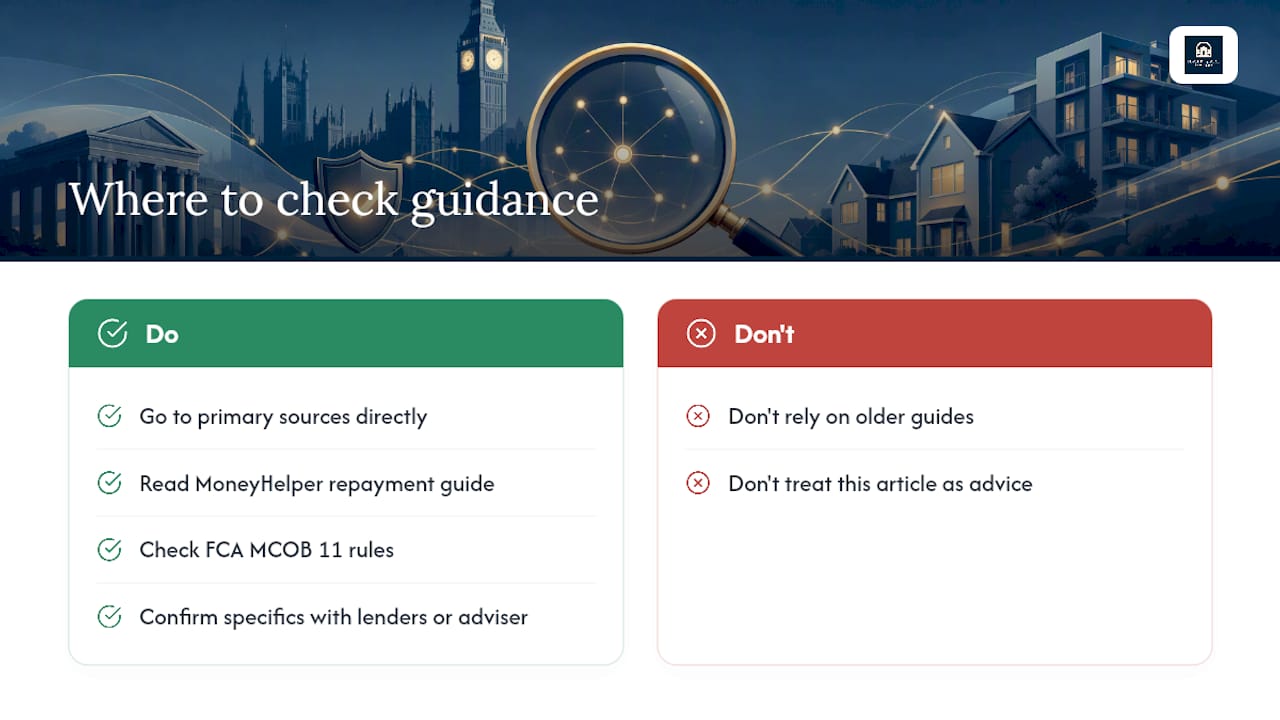
This article is general information, not a substitute for advice from a qualified financial advisor. Consult a qualified financial professional about your own circumstances before acting on anything here.
Sources
- Ways of repaying an interest-only mortgage | MoneyHelper
- FCA handbook: MCOB 11 (interest-only mortgages)
- What is an interest-only mortgage? | Experian
- Buy to Let Mortgage Explained: 2026 UK Landlord Guide
FAQ
How much is a £200,000 interest-only mortgage a month in the UK?
The monthly cost depends entirely on the interest rate applied, since you are paying interest only on the full £200,000 with no capital repayment; a regulated adviser or lender can quote an exact figure against current rates for your circumstances.
Do any lenders offer interest-only mortgages?
Yes. Interest-only is standard for buy-to-let lending, and a smaller number of lenders offer it for residential purchases, typically where the borrower can evidence a credible repayment strategy under MCOB 11.6.
What are the current interest-only mortgage rates in the UK?
Rates move regularly and vary by lender, loan-to-value, and whether the loan is residential or buy-to-let, so there is no single fixed figure; check current lender criteria or speak to an adviser for an up-to-date comparison.
How much is a £300k mortgage per month in the UK on interest-only?
As with any interest-only loan, the monthly payment is simply the interest charged on the full loan balance, since no capital is repaid during the term; the exact amount depends on the rate you secure.
What happens if my repayment vehicle fails before the mortgage matures?
Speak to your lender or adviser as early as possible. Options can include extending the term, switching to full or part repayment, or arranging a follow-on product, and FCA guidance expects lenders to engage constructively before considering repossession.
Recommended
- Fixed term contract mortgage: what England lenders expect
- Bank Rate 3.75%: Fixed or Tracker Mortgage, Practical UK Adviser View
- Can you remortgage with negative equity in England?
- Zero hours contract mortgage: your options explained
This article provides general information only and does not constitute personalised mortgage advice. Mortgage availability, affordability and lender criteria depend on individual circumstances and may change. Please seek advice tailored to your circumstances before acting on this information.