
IMPORTANT: YOUR HOME MAY BE REPOSSESSED IF YOU DO NOT KEEP UP REPAYMENTS ON YOUR MORTGAGE.
A mortgage on a timber frame house in England is often available, but it is not automatic. Lenders assess the age of the build, its condition, any warranty, the materials used and how easily the property could be resold. Policies differ from one lender to the next, so a refusal from one does not mean a refusal from all, and an acceptance from one does not set a rule for the market.
This guide explains what lenders look at, which checks to complete before you commit, and how your own income and documents form part of the same application. Nothing here guarantees eligibility, acceptance, borrowing or rates.
TL;DR
- Lenders do not treat all timber frame homes alike. Build date, condition, warranty and external finish all affect the decision.
- Post-1970 timber frame homes are more widely considered than older ones. One lender's published criteria are used below as an example only.
- A lender's valuation is not a survey. For a timber frame property, an RICS Level 3 Building Survey is the check that looks at the structure for your benefit.
- A new build warranty such as NHBC Buildmark, or evidence of an accepted building system, can strengthen an application.
- Your income and the property are assessed together. Employed, self-employed and contractor applicants each need to present different evidence.
Table of Contents
- What counts as a timber frame property
- Why lenders treat timber frame as a risk question
- Build age: the first factor
- Warranty and new build evidence
- Materials and finish that can narrow the choice
- The valuation is not a survey
- Order of work for a timber frame purchase
- Your income is assessed alongside the property
- Other cases where timber frame comes up
- How Haven Mark Advisers works on these cases
- Common mistakes to avoid
- FAQ
- Sources
What counts as a timber frame property
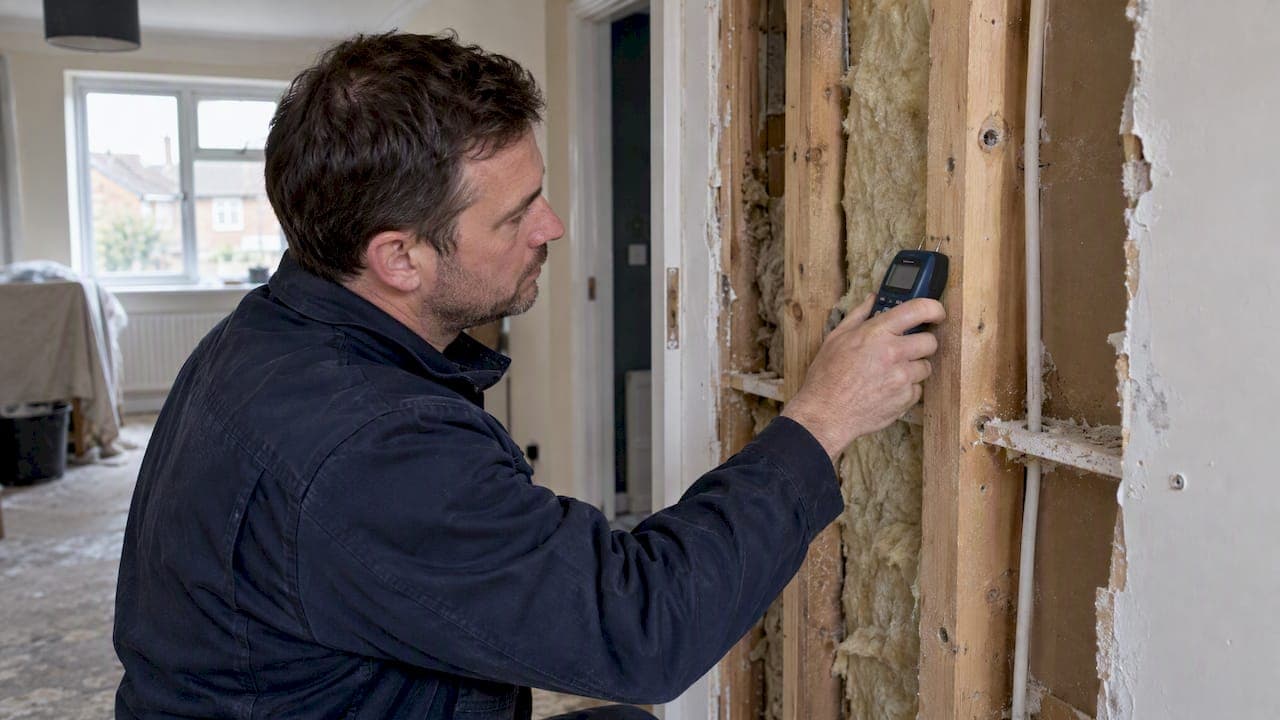
A timber frame home has a structural frame of timber, with an outer leaf of brick, render, tile or cladding. Many modern homes are built this way, and the frame is often not visible from outside. Period properties with exposed oak frames, such as Tudor and medieval houses, are also timber framed, but lenders assess them differently from a 2010s estate home.
This matters because the word "timber frame" on a listing can cover three quite different situations:
- A modern home built under current building regulations, usually with a structural warranty.
- A mid-century or ex-local authority property built between roughly 1900 and 1970.
- A historic or listed period frame property.
Lenders place each of these in a different risk category. Establish which one you are looking at before you apply.
Why lenders treat timber frame as a risk question
Lenders do not lend on the basis of a feeling about a material. They lend against security: the property must be worth the loan and must be resaleable if the loan is not repaid. Timber frame properties raise questions about moisture, decay, fire resistance, workmanship and insulation. Where those questions cannot be answered from the paperwork, a lender may restrict its lending, ask for a specialist report, or decline.
Government policy is moving towards more building with timber. The Timber in Construction Roadmap sets out the Government's aims for wider use of timber in buildings. Wider use does not change an individual lender's criteria today. Each lender sets its own policy, and you should assess your own case against current criteria.
Build age: the first factor
The date of construction is usually the first filter. As an illustration of how one lender states it, the Family Building Society's intermediary criteria say it can potentially consider timber frame properties built after 1970 for residential lending. Its published notes treat older timber frame homes differently, and homes from 1900 to 1970 may depend on listed status or the valuer's view.
That is one lender's policy. It is not a market-wide rule, and other lenders set their own cut-off dates and conditions. Use it to understand the shape of the question, not to predict an outcome.
| Build period | Typical lender question | What usually helps |
|---|---|---|
| After 1970 | Is the frame sound and is there evidence of how it was built? | Warranty, building regulations sign-off, survey |
| 1900 to 1970 | Is the property acceptable at all under this lender's policy? | Survey, valuer comment, a lender that considers the type |
| Historic or listed | Is the condition sound and is the property marketable? | Specialist survey, listed status information |
The table describes the questions lenders ask, not a promise about any lender's decision.
Warranty and new build evidence
For a recently built home, the structural warranty is often the document a lender looks for first. NHBC's Buildmark is a 10-year policy covering builder warranty and insurance for newly built and newly converted homes. A property without a recognised warranty may be treated as non-standard, which can reduce the number of lenders willing to consider it.
Innovative timber systems add another layer. NHBC runs NHBC Accepts, which has welcomed panelised systems including a timber frame product, and its System Review route certifies innovative systems for use in homes covered by its warranty and insurance policies. If you are buying a new build, ask the developer which warranty applies and whether the construction system has been reviewed. Our new build mortgage page sets out how we approach these purchases.

Materials and finish that can narrow the choice
Timber frame is only part of what a lender sees. Other features can change how a case is read:
- External cladding. A brick outer leaf is viewed differently from heavy timber or other cladding.
- Alterations. Extensions, loft conversions and insulation work should have the right consents and records.
- Insulation. RICS guidance on spray foam insulation stresses keeping records and photographs of the roof structure, ventilation and moisture readings before, during and after works. In a timber roof or frame, that evidence matters.
- Previous defects. Evidence of damp, decay or earlier repairs may lead to further enquiries.
If the seller has made changes, ask the conveyancer early for the paperwork. Missing certificates are a common cause of delay.
The valuation is not a survey
The lender's valuation protects the lender. The RICS consumer guide to home surveys describes it as a limited check, carried out to confirm the property is worth the amount being lent. It is not a report on the condition of the building for you.
For a timber frame home, that gap matters. Hidden decay, inadequate cavity barriers or poor fire stopping may not appear in a valuation. MoneyHelper notes that mortgage valuation fees vary and are not a substitute for a survey, with the typical ranges it gives being £150 to £800 for a lender valuation and £400 to £1,500 for a RICS Level 3 Building Survey. Costs vary by property size, value and location.
For this property type, we would normally expect a buyer to consider a Level 3 survey before exchange of contracts. Read our guide to non-standard construction mortgages and RICS Level 3 surveys for how the two fit together. If the survey raises serious concerns, speak to your conveyancer and a chartered surveyor before you proceed. The decision to buy remains yours.

Order of work for a timber frame purchase
The order in which you do things can save weeks and avoid fees on a property that a lender will not accept.
- Identify the construction early. Check the listing, the agent and any available survey information. Ask the agent directly whether the property is timber framed, and the year it was built.
- Gather the documents. For newer homes, ask for the warranty certificate and building regulations completion certificate. For older homes, ask for any previous survey, repair history and planning or listed building information.
- Speak to an adviser before the offer. A mortgage in principle is only a written estimate of what a lender may be willing to lend, based on a quick check of your income and sometimes your credit file. It does not tell you whether the lender will accept this particular property.
- Commission the survey. Arrange the Level 3 survey on your own account, in parallel with the lender's valuation.
- Apply with the property type disclosed. Disclose the construction to the lender. Do not omit or soften any known feature of the property.
- Review the offer and the survey together. If the survey and valuation disagree, take advice before you exchange.
Your income is assessed alongside the property
A lender asks two questions at once: is the property acceptable security, and can this borrower afford the loan? Both must be answered. A straightforward timber frame home does not rescue an application with weak income evidence, and a strong income does not make an unacceptable property acceptable.
How you evidence income depends on how you are employed.
Employed applicants
Payslips, a P60 and bank statements are the usual starting point. Bonuses, commission and allowances are treated differently by different lenders, so give your adviser the full picture.
Self-employed and business owners
Lenders generally look for tax calculations, tax year overviews, and sometimes accounts or an accountant's reference. Keeping clean, up-to-date records makes that evidence easier to produce. If you are a sole trader, tools for keeping tax-ready records for Self Assessment can help you maintain them through the year. Our guides on the self-employed mortgage and the self-employed and business owner service explain the documents involved.
Contractors
Day-rate contractors and umbrella company workers are assessed differently from permanent employees, and lenders vary in how they use a contract rate. See contractor mortgages, day-rate contractor mortgages and umbrella contractor mortgages.
A known change in your circumstances, such as a contract ending, a change of employer or a planned career break, must be disclosed where the lender asks about it. Concealing it can harm your application and your position later.
Deposit
MoneyHelper states that in most cases you need a minimum deposit of 5% of the property value. It also warns that low deposit options can mean a higher interest rate. For non-standard construction, a larger deposit may widen the choice of lenders, but this depends on the lender and is never certain.
Other cases where timber frame comes up
- Remortgage. If you already own a timber frame home and want a new lender, the new lender assesses the property afresh. A product transfer with your existing lender is a different route, since it is a new deal with the same lender, and it may not involve a new property assessment. We handle both, and our remortgage advice page explains the difference.
- Buy-to-let. Landlords face the property test and a rental affordability test. See our buy-to-let page and the guide to rental income mortgage rules.
- Second homes. A holiday or second property in timber frame faces the same checks. See second home mortgages.
- Foreign nationals. Residency and immigration status affect lender choice as well as the property. Our guide to pre-settled status mortgages covers one common situation.
How Haven Mark Advisers works on these cases
Each client at Haven Mark Advisers works with one dedicated adviser from start to finish. On a timber frame purchase, that adviser reviews your income, the property details and the documents you hold, and approaches lenders suited to the case. We do not promise any lender's decision, and we do not treat one lender's criteria as a rule for the market.
Our published fees are £495 for a purchase mortgage service and £195 for a remortgage service, each a one-off fee. Details, including how we are paid and the possibility of commission from lenders, are on our fees page. To see how we prepare a case before a lender is approached, read how we get you ready to offer, or start from our residential mortgages page.
Common mistakes to avoid
- Relying on the valuation. It does not examine the property for your protection.
- Applying before checking the construction. Several applications to lenders who will not consider the property waste time and fees.
- Assuming a mortgage in principle covers the property. It is an estimate based on you, not on the house.
- Ignoring alterations. Unrecorded extensions and insulation work can cause queries late in the process.
- Leaving out known changes. Any anticipated change to income or employment must be disclosed where asked.
FAQ
Can I get a mortgage on a timber frame house in England?
Often yes, but it depends on the lender and the property. Build date, condition, warranty and external finish all affect the decision. No adviser can guarantee acceptance before the lender has assessed the case.
Is a timber frame house harder to mortgage than a brick-built one?
The choice of lenders can be narrower, particularly for older or unusual properties. Newer homes with a recognised warranty are generally easier to place than those without evidence of how they were built. Each lender's criteria differ, so the picture varies case by case.
Do I need a Level 3 survey on a timber frame property?
A lender does not always require it, but it is the survey that examines the building's structure in depth for your own benefit. The lender's valuation does not do this. Discuss the choice of survey with your conveyancer and a chartered surveyor.
Does a new build timber frame need a warranty?
Lenders generally expect new homes to carry a recognised structural warranty, such as NHBC Buildmark. Without one, the property may be treated as non-standard and fewer lenders may consider it. Ask the developer for the warranty details before you reserve.
Is a product transfer the same as a remortgage on a timber frame home?
No. A product transfer is a new deal with your existing lender, whereas a remortgage moves your borrowing to a new lender who assesses the property again. Which route suits you depends on your circumstances and the lender's policy.
Sources
- Buying a house or flat in England, Wales and Northern Ireland, MoneyHelper
- What happens when I get a mortgage in principle, MoneyHelper
- Property Construction: Timber framed (Post 1970), Family Building Society
- Timber in Construction Roadmap 2025, GOV.UK
- Buildmark warranty and insurance, NHBC
- NHBC Accepts announcement, NHBC
- NHBC System Review certificates, NHBC
- Spray foam insulation consumer guide, RICS
- Home surveys consumer guide, RICS
Recommended
- Get a Non Standard Construction Mortgage in England with RICS Level 3
- Remortgaging your home to fund improvements
This article provides general information only and does not constitute personalised mortgage advice. Mortgage availability, affordability and lender criteria depend on individual circumstances and may change. Please seek advice tailored to your circumstances before acting on this information.